
Stonemason and Companionship
In the ancient days of operative Masonry, when the great cathedrals and temples were rising across the world, the Companion was the skilled craftsman who journeyed from city to city, from worksite to worksite, perfecting his art and offering his labour wherever the work called him. He carried with him not only his tools, but his reputation — and wherever he was received, he was judged by the square of his conduct and the compasses of his character. Before Freemasonry became speculative, it was operative. Before symbols adorned our tracing boards, they were tools in the hands of working men. And at the heart of that operative tradition stood the Stone Mason Guild and the institution of Companionship.
In medieval Europe, the Guild was more than a professional association. It was a structured brotherhood of craftsmen who preserved the secrets of their trade, regulated standards of workmanship, ensured mutual protection, and safeguarded moral conduct. The Guild provided training, discipline, and fraternity. It united masters, journeymen, and apprentices in a shared responsibility for excellence. The Companion — the journeyman — occupied a pivotal place within this structure. Having completed his apprenticeship, he was no longer a novice. He had proven his skill, his reliability, and his character. Yet he was not at the end of his journey. On the contrary, this was the beginning of his wider path. Traditionally, the Companion travelled. He moved from city to city, from chantier to chantier, working under different masters, studying different styles, refining both his hand and his mind. This journey was not merely professional — it was formative. Travel broadened his technique, deepened his discipline, and matured his understanding of the craft.
Compagnonship was therefore a school of excellence and humility. The travelling mason learned that knowledge is never complete, that mastery requires perseverance, and that true dignity lies not only in skill, but in conduct. The Guild ensured that wherever he went, he would find recognition among his peers. Signs, customs, and shared principles created trust across regions and languages. The stone mason might cross borders, but he did not leave his brotherhood behind.
In speculative Freemasonry, we inherit this legacy. The Second degree reminds us that we too are travellers — not only across geography, but across knowledge, experience, and self-improvement. The Temple we build is no longer of stone, but of character. Yet the principles remain the same: discipline, fraternity, excellence, and moral uprightness.
On the Square : A Handbook for Freemasons
On the Square: A Handbook for Freemasons” (1923) by William Hy Beable is a foundational guide designed for initiates. It covers topics like the square’s symbolism, lodge structure, and the obligations of members to act with integrity. Written by William Hy Beable a member of the Aldwych Club Lodge 3794, it aims to educate new members on behaving “on the square”—meaning honestly and straightforwardly
On the Square
By W. H. Beable
Ancien freemasonry
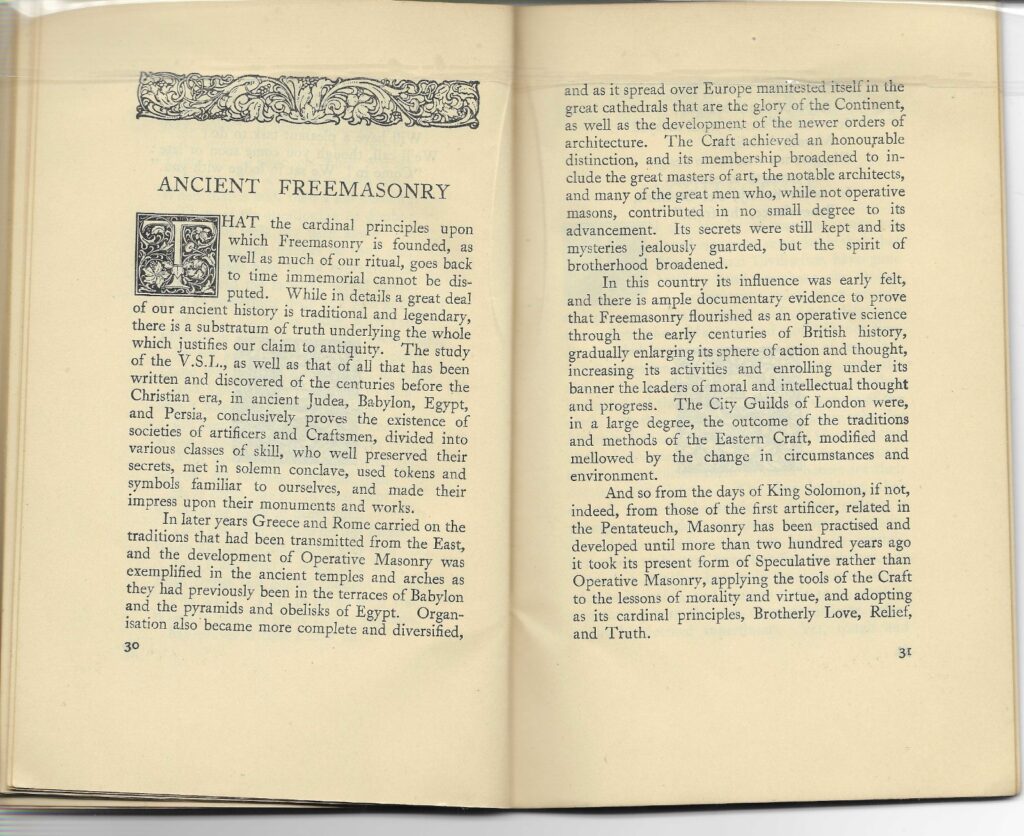
THAT the cardinal principles upon which Freemasonry is founded as well as much of our ritual, goes back to time immemorial cannot be disputed. While in details a great deal of our ancient history is traditional and legendary, there is a substratum of truth underlying the whole which justifies our claim to antiquity. The study of the V.S.L., as well as that of all that has been written and discovered of the centuries before the Christian era, in ancient Judea, Babylon, Egypt, and Persia, conclusively proves the existence of societies of artificers and Craftsmen, divided into various classes of skill, who well preserved their secrets, met in solemn conclave, used tokens and symbols familiar to ourselves, and made their impress upon their monuments and works,
In later years Greece and Rome carried on the traditions that had been transmitted from the East, and the development of Operative Masonry was exemplified in the ancient temples and arches as they had previously been in the terraces of Babylon and the pyramids and obelisks of Egypt. Organisation also became more complete and diversified,
and as it spread over Europe manifested itseif in the great cathedrals that are the glory of the Continent, é as well as the development of the newer orders of architecture. ‘The Craft achieved an honourable distinction, and its membership broadened to include the great masters of art, the notable architects, and many of the great men who, while not operative masons, contributed in no small degree to its advancement. Its secrets were still kept and its mysteries jealously guarded, but the spirit of brotherhood broadened.
In this country its influence was early felt, and there is ample documentary evidence to prove that Freemasonry flourished as an operative science through the early centuries of British history, gradually enlarging its sphere of action and thought, increasing its activities and enrolling under its banner the leaders of moral and intellectual thought and progress. The City Guilds of London were, in a large degree, the outcome of the traditions and methods of the Eastern Craft, modified and mellowed by the change in circumstances and environment.
And so from the days of King Solomon, if not, indeed, from those of the first artificer, related in the Pentateuch, Masonry has been practised and developed until more than two hundred years ago it took its present form of Speculative rather than Operative Masonry, applying the tools of the Craft to the lessons of morality and virtue, and adopting as its cardinal principles, Brotherly Love, Relief, and Truth.
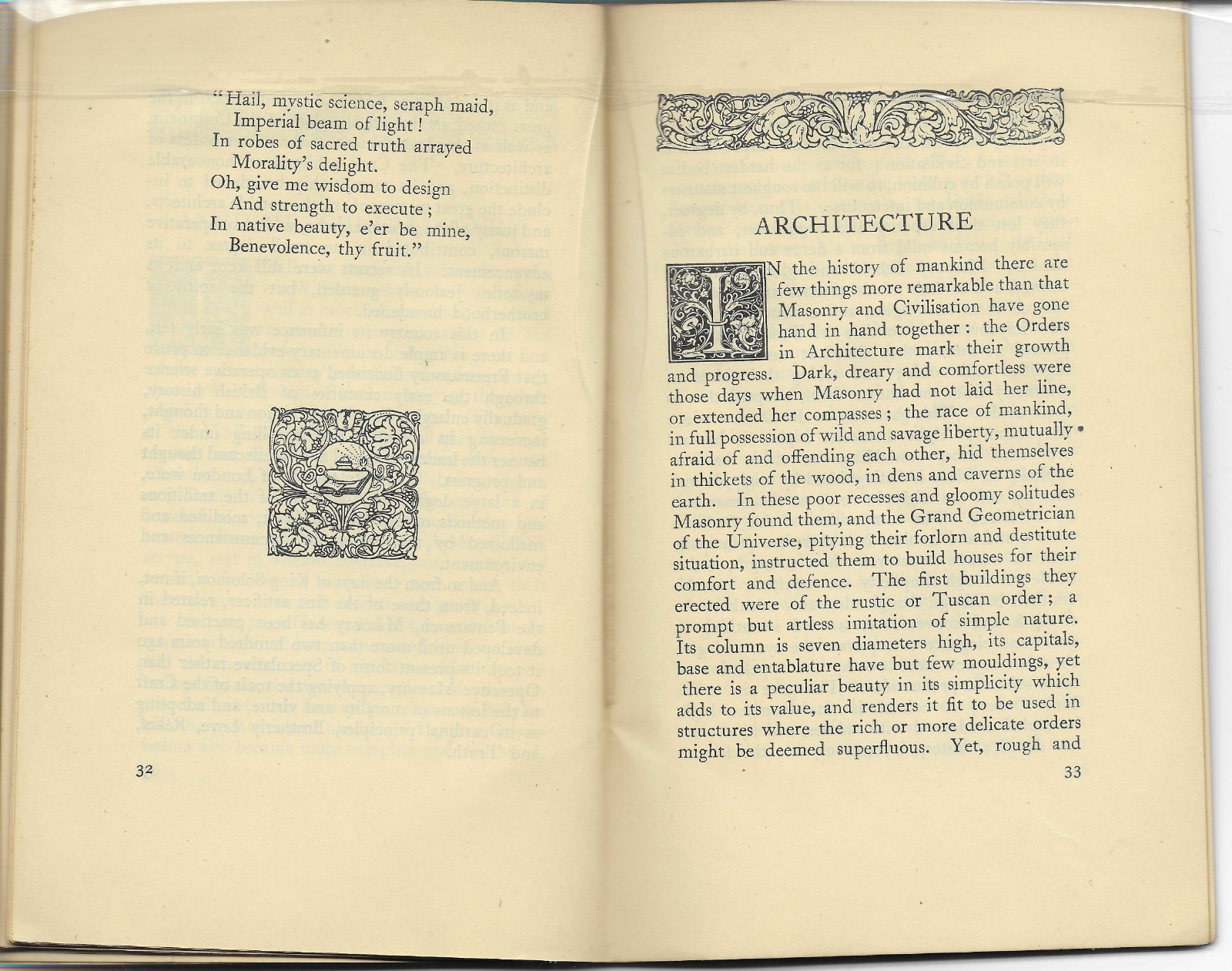
“Hail, mystic science, seraph maid,
Imperial beam of light !
In robes of sacred truth arrayed
Morality’s delight.
Oh, give me wisdom to design
And strength to execute ;
In native beauty, e’er be mine,
Benevolence, thy fruit.
Stonemason and Architecture
Throughout history, Masonry and civilisation have advanced together, reflected in the development of the architectural Orders. In humanity’s earliest, savage state, people lived in forests and caves until Masonry, guided by the “Grand Geometrician of the Universe,” inspired them to build for shelter and security. The first structures were simple and rustic, represented by the Tuscan Order—plain, strong, and natural—yet they fostered community, refinement, and social progress.
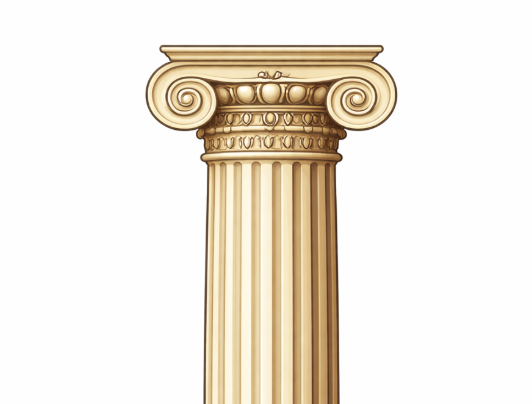
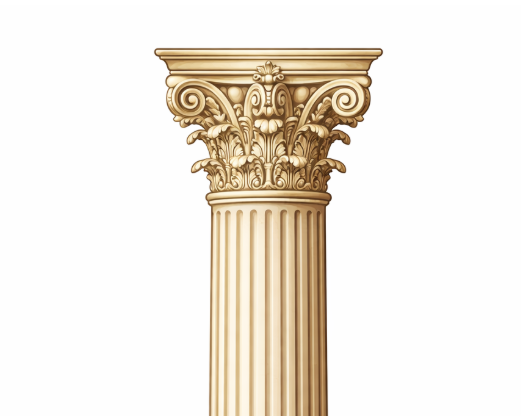
As human society evolved, architectural forms grew more sophisticated. The Doric Order emerged, dignified and powerful, symbolising strength and noble simplicity. It was followed by the Ionic Order, more elegant and refined, inspired by the proportions of a graceful woman and exemplified in the Temple of Diana at Ephesus. With further artistic maturity came the richly ornamented Corinthian Order, conceived by Calimachus and inspired by the image of acanthus leaves growing around a basket on a tomb. Finally, the Composite Order united elements of all previous styles, blending strength, elegance, and beauty.
Thus, the progression of architectural Orders mirrors the refinement of human genius: from primitive necessity to artistic perfection. Masonry, through its symbolic and practical influence, illuminated the arts and sciences, elevating civilisation and inspiring the highest achievements of human creativity.
On the Square : A Handbook for Freemasons
On the Square: A Handbook for Freemasons” (1923) by William Hy Beable is a foundational guide designed for initiates. It covers topics like the square’s symbolism, lodge structure, and the obligations of members to act with integrity. Written by William Hy Beable a member of the Aldwych Club Lodge 3794, it aims to educate new members on behaving “on the square”—meaning honestly and straightforwardly
On the Square
By W. H. Beable
Architecture
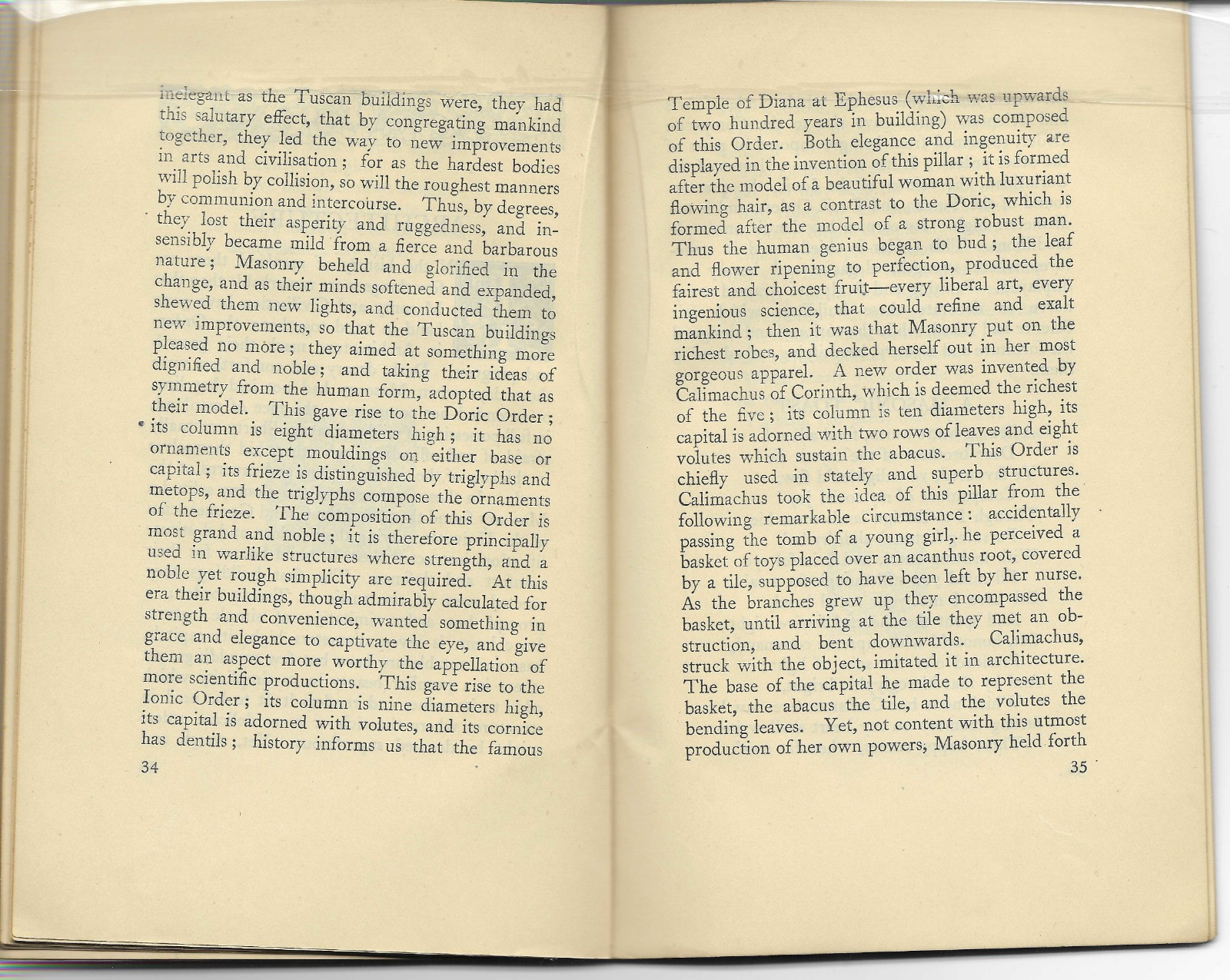
IN the history of mankind there are ale few things more remarkable than that Masonry and Civilisation have gone hand in hand together: the Orders in Architecture mark their growth and progress. Dark, dreary and comfortless were those days when Masonry had not laid her line, or extended her compasses; the race of mankind, in full possession of wild and savage liberty, mutually ° afraid of and offending each other, hid themselves in thickets of the wood, in dens and caverns of the earth. In these poor recesses and gloomy solitudes : Masonry found them, and the Grand Geometrician of the Universe, pitying their forlorn and destitute situation, instructed them to build houses for their comfort and defence. The first buildings they erected were of the rustic or Tuscan order; a prompt but artless imitation of simple nature. Tts column is seven diameters high, its capitals, base and entablature have but few mouldings, yet there is a peculiar beauty in its simplicity which adds to its value, and renders it fit to be used in structures where the rich or more delicate orders might be deemed superfluous.
Yet, rough, and inelegant-as the Tuscan buildings were, they had this salutary effect, that by congregating mankind together, they led the way to new improvements in arts and civilisation ; for as the hardest bodies will polish by collision, so will the roughest manners by communion and intercourse. Thus, by degrees, ‘they lost their asperity and ruggedness, and insensibly became mild from a fierce and barbarous nature; Masonry beheld and glorified in the change, and as their minds softened and expanded, shewed them new lights, and conducted them to new improvements, so that the ‘Tuscan buildings pleased no more; they aimed at something more dignified and noble; and taking their ideas of symmetry from the human form, adopted that as their model. This gave rise to the Doric Order ; its column is eight diameters high; it has no ornaments except mouldings on either base or : capital ; its frieze is distinguished by triglyphs and metops, and the triglyphs compose the ornaments of the frieze. The composition of this Order is most grand and noble; it is therefore principally used in warlike structures where strength, and a noble yet rough simplicity are required. At this era their buildings, though admirably calculated for strength and convenience, wanted something in grace and elegance to captivate the eye, and give them an aspect more worthy the appellation of more scientific productions. This gave rise to the Ionic Order; its column is nine diameters high, its capital is adorned with volutes, and its cornice has dentils; history informs us that the famous ‘Temple of Diana at Ephesus (which-was upwards of two hundred years in building) was composed of this Order.
Both elegance and ingenuity are displayed in the invention of this pillar ; it is formed after the model of a beautiful woman with luxuriant flowing hair, as a contrast to the Doric, which is formed after the model of a strong robust man. Thus the human genius began to bud; the leaf and flower ripening to perfection, produced the fairest and choicest fruit—every liberal art, every ingenious science, that could refine and exalt mankind; then it was that Masonry put on the richest robes, and decked herself out in her most gorgeous apparel. A new order was invented by Calimachus of Corinth, which is deemed the richest of the five; its column is ten diameters high, its capital is adorned with two rows of leaves and eight volutes which sustain the abacus. This Order is chiefly used in stately and superb structures. Calimachus took the idea of this pillar from the following remarkable circumstance : accidentally – passing the tomb of a young girl, he perceived a basket of toys placed over an acanthus root, covered by a tile, supposed to have been left by her nurse. ‘As the branches grew up they encompassed the basket, until arriving at the tile they met an obstruction, and bent downwards. Calimachus, struck with the object, imitated it in architecture. The base of the capital he made to represent the basket, the abacus the tile, and the volutes the bending leaves.
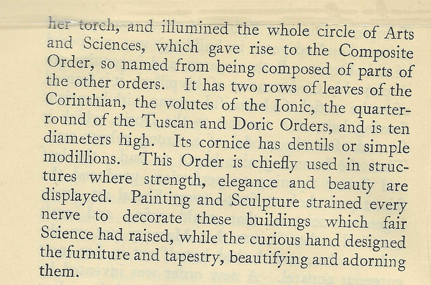
Yet, not content with this utmost production of her own powers, Masonry held forth her torch, and illumined the whole circle of Arts and Sciences, which gave rise to the Composite Order, so named from being composed of parts of the other orders. It has two rows of leaves of the Corinthian, the volutes of the Tonic, the quarterround of the Tuscan and Doric Orders, and is ten diameters high. Its cornice has dentils or simple modillions. This Order is chiefly used in structures where strength, elegance and beauty are displayed. Painting and Sculpture strained every nerve to decorate these buildings which fair Science had raised, while the curious hand designed the furniture and tapestry, beautifying and adorning them.
On the Square
By W. H. Beable
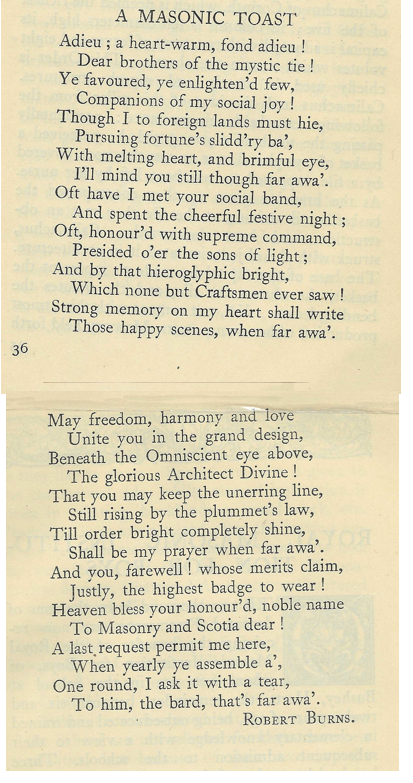
A Masonic Toast
Adieu ; a heart-warm, fond adieu !
Dear brothers of the mystic tie!
Ye favoured, ye enlighten’d few,
Companions of my social joy !
Though I to foreign lands must hie,
Pursuing fortune’s slidd’ry ba’,
With melting heart, and brimful eye,
I’ll mind you still though far awa’.
Oft have I met your social band,
And spent the cheerful festive night ;
Oft, honour’d with supreme command,
Presided o’er the sons of light ;
And by that hieroglyphic bright,
Which none but Craftsmen ever saw !
Strong memory on my heart shall write
Those happy scenes, when far awa’.
May freedom, harmony and love
Unite you in the grand design,
Beneath the Omniscient eye above,
The glorious Architect Divine !
That you may keep the unerring line,
Still rising by the plummet’s law,
Till order bright completely shine,
Shall be my prayer when far awa’.
And you, farewell ! whose merits claim,
Justly, the highest badge to wear !
Heaven bless your honour’d, noble name
“To Masonry and Scotia dear !
A last. request permit me here,
When yearly ye assemble a
One round, I ask it with a tear,
To him, the bard, that’s far awa’.
Rosert Burns.
Oo
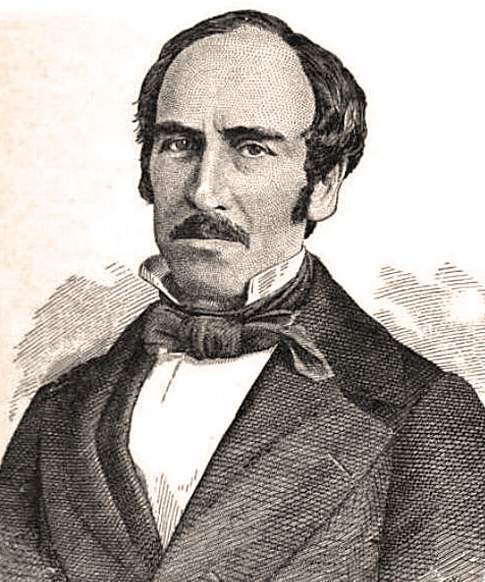
William Henry Beable
On the Square” author, William Henry Beable was born in 1860, and an active member of Aldwych Club Lodge,. William Henry Beable was an international Sales Manager esp. in Russia and Eastern Europe, he wrote eight other business books beside “On the Square” about doing business: Romance of great businesses, On the road; A book of experience and advice; Commercial Russia; Behind the Counter. A Practical Guide for Shop Assistants; Stories for speeches; After-Dinner Stories, with some practical hints on short speeches; Russian gazetteer and guide, being an account of the territorial divisions and a description of over 300 of the principal towns and cities of Russia, Finland and Siberia; Celebrated and Historical Speeches: an Anthology of Ancient and Modern Oratory; Epitaphs : Graveyard Humour & Eulogy.
Let’s reconnect with operative stonemasons
Masonic aprons are a central, symbolic piece of regalia in Freemasonry, representing the craft’s history, honor, and moral character. Historically derived from the protective leather aprons of 17th-century operative stonemasons, they now symbolize the “badge of honorable labor” and are worn during meetings, rituals, and ceremonies, with lambskin being the traditional material.
The apron is considered the “badge of a Mason” and is the first gift a new member receives upon initiation. It evolved from the heavy, protective leather aprons worn by operative stonemasons of the Middle Ages into the symbolic ritual garment used by speculative Masons today.
In the English Constitution, the transition from a plain white apron to one adorned with Cambridge Blue occurred officially after the Union of the two Grand Lodges in 1813. While many associate the color with the “vault of heaven” representing universal friendship and benevolence, its historical adoption was largely influenced by the Order of the Garter, the highest order of British knighthood.
Cambridge Blue is used for the English Master Mason’s apron because it was the original color of the Grand Officers’ regalia before 1745. Traditionally, the two shades of blue used by the United Grand Lodge of England (UGLE) are compared to England’s premier universities: Cambridge Blue (light blue) for the general membership and Oxford Blue (dark blue) for the ruling Grand Officers.
The color of the Apron
Aldwych Club Lodge
Master Mason’s Apron
The apron is the primary symbol of a member’s progress and moral status Master Mason (3rd Degree). The Cambridge blue represents the universality of the fraternity UGLE.
Aldwych Club Lodge
Master Mason’s Apron
The Craft apron, featuring a sky blue (Cambridge Blue) border, three rosettes (one on the flap), and two silver tassels or “pendants.” The tassels represent the two pillars, Jachin and Boa

Why Join
Freemasonry presents a structured path of moral reflection and self-development, communicated through a series of allegorical ceremonial dramas. These traditional ceremonies, learned and performed by members within the Lodge, employ symbolism, narrative, and ritual action to convey ethical teachings and to guide the individual in the gradual cultivation of character and understanding.
View →
How to join
A common misconception about Freemasonry is that a man must be invited to become a member. This is not true.
There is no requirement to wait for an invitation. On the contrary, the proper and traditional way to begin the journey into Freemasonry is for a man to express his own interest and ask to join.
View →
Lodge Meeting Dates
The regular meetings are held four times per year on:
4th Tuesday in October, 3rd Monday in December, 3rd Wednesday in February and 3rd Tuesday in May within the magnificent building, Freemasons Hall, Covent Garden, 60 Great Queen Street,
London WC2 5AZ