
On the Square
On the Square: If someone is on the square, he is being totally honest or transparent; fair and straightforward; correct or in agreement with you.
Among the working tools of our ancient Craft, there is none more familiar, none more constantly before our eyes, and yet none more searching in its lesson than the Square. In its operative use, the square is simple. It is formed by two arms meeting at a perfect right angle. Its purpose is exactness. It tests the stone. It determines whether the work is true. If the angle is imperfect, the fault is not in the tool, but in the material or the hand that shaped it. The square does not compromise. It measures — and it reveals. From this humble instrument arises one of the greatest moral emblems in Freemasonry. When we speak of acting “on the square,” we mean something the world readily understands. In common language, a “square deal” is one that is fair and honest. A person who is “on the square” is transparent, upright, and reliable. This association did not arise by accident. It flows directly from the ancient symbolism of our Craft, where what is square is correct — aligned — true. The Square is a symbol of an inner discipline. Do we shape our character with the same care that the ancient mason shaped his stone? In speculative Masonry, the Square becomes the rule and guide of our conduct. It teaches that our lives must be tested as carefully as the stones of a temple. It calls us to fairness in judgment, honesty in speech, integrity in action, and consistency between our words and our deeds. To live “on the Square” means aligning conduct with principle. If we profess Brotherly Love, then we must practice it. If we speak of Relief, then we must extend it. If we proclaim Truth, then we must embody it. Hospitality to a Brother who properly stands at our door is not optional courtesy; it is moral coherence. It is the Square applied to action. Within the Lodge, the Square is also associated with authority and responsibility. It reminds those who govern that leadership must be guided by moral law, not by personal advantage. Power must be squared by justice. Decisions must be tested by fairness. No one can perfectly judge who is truly “on the Square.” The Square is a reminder that integrity must be constant, not occasional; that fairness must be habitual, not convenient; and that truth must govern us even when it costs us. Let us therefore examine ourselves by that ancient tool. Let us measure our actions, square our intentions, and refine our conduct. For the true work of a Mason is not only in ritual or instruction, but in living uprightly. The question remains simple, yet profound: Are we living on the Square? May we ever strive to do so — in our homes, in our professions
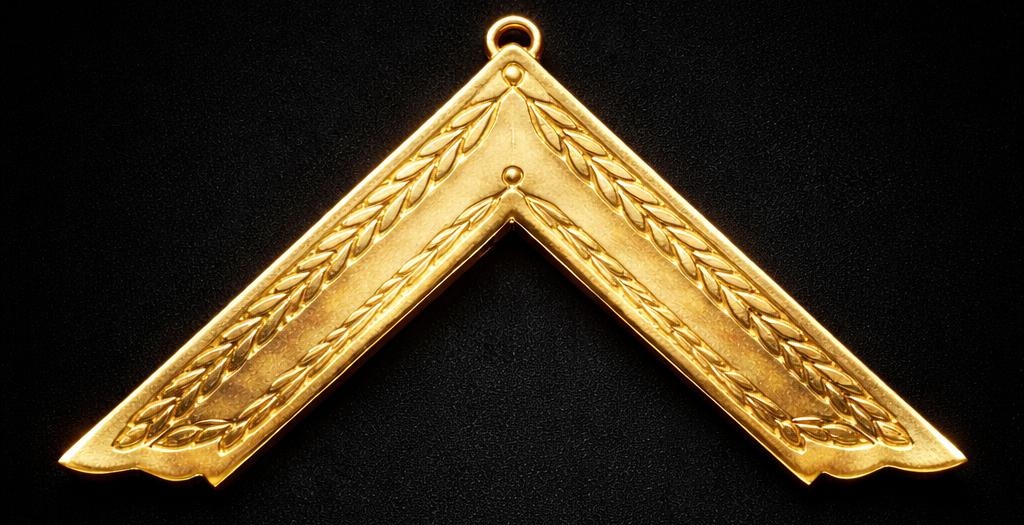
The Square is one of the most powerful symbols in Freemasonry. Originally a builder’s tool used to test whether a stone was perfectly shaped, it has become a moral emblem reminding us to shape our character with the same precision. To act “on the square” means to be fair, honest, and true in our dealings — to live with integrity. Each of us carries an inner square, our conscience, measuring our thoughts and actions. On the Square. Among the principal symbols of Freemasonry, the Square holds a place of particular importance. It is one of the first emblems explained to a newly initiated Mason and remains central throughout Masonic instruction. In operative terms, the square is a practical tool formed by two arms meeting at a right angle. Its purpose in architecture is to test and ensure accuracy. From this simple but precise function arises its symbolic meaning. What is physically “square” is correct, true, and properly aligned. Thus, in speculative Masonry, the Square becomes a moral instrument. The Square represents upright conduct. It teaches that one’s life should be governed by fairness, honesty, and integrity. To “act upon the square” is to treat others with justice and equity — to deal with them as one would wish to be dealt with in return. Within the Lodge, the Square is associated with authority and responsibility. It symbolizes leadership governed by moral law, not personal advantage. It reminds every Mason that character must be measured, actions examined, and intentions tested. The influence of this symbol extends beyond the Lodge. Its meaning has entered common language. Expressions such as receiving a “square deal” reflect the enduring association of the square with fairness and straightforwardness. More profoundly, the Square represents the inner moral compass of every individual. Each person possesses an internal standard — conscience — by which thoughts, words, and actions may be examined. The true work of a Mason is to measure himself against that standard continually, asking whether his conduct aligns with virtue. To live “on the square” is therefore not merely to understand a symbol, but to embody it. It is to regulate behaviour with openness and sincerity, to practice integrity in private as well as in public, and to strive for moral rectitude in all dealings. In this way, a simple working tool becomes a guide for life — a reminder that character, like stone, must be shaped, tested, and squared before it can form part of a lasting structure.
On the Square : A Handbook for Freemasons
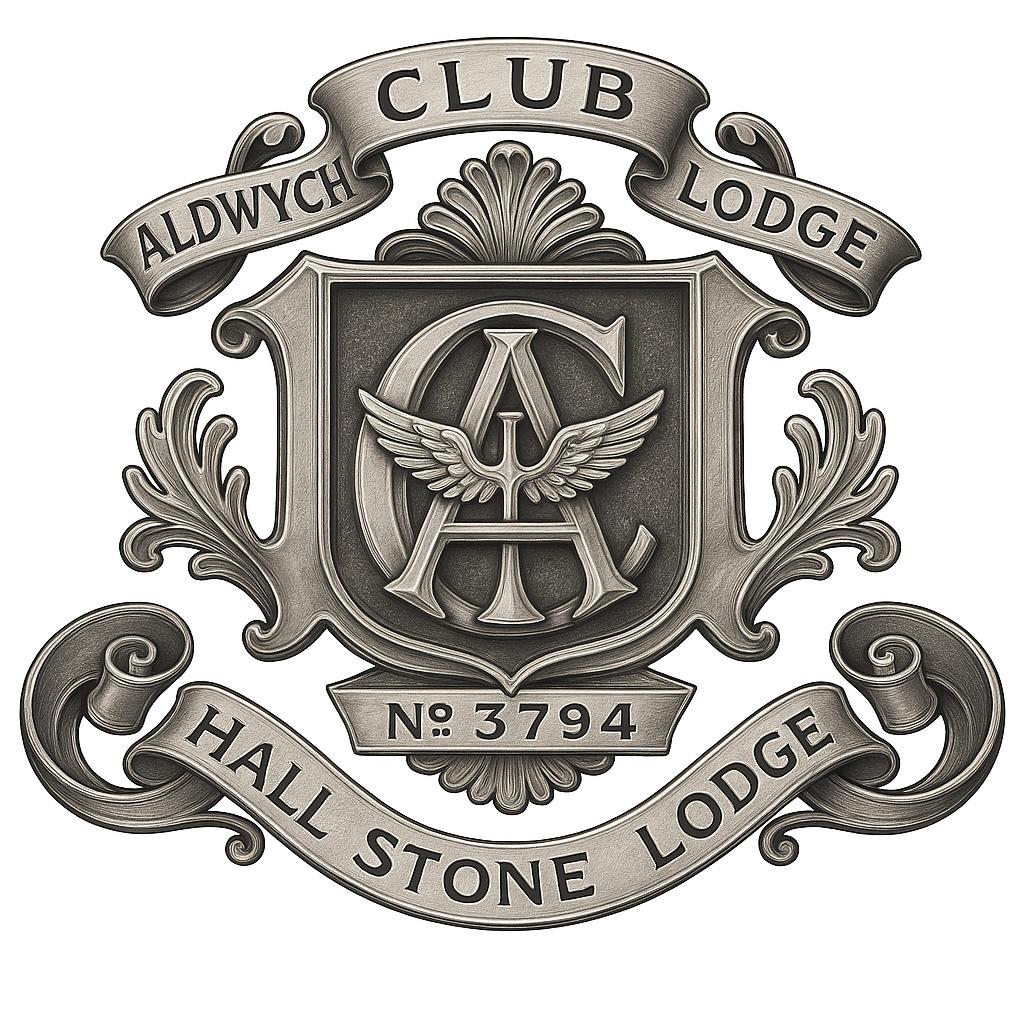
On the Square: A Handbook for Freemasons” (1923) by William Hy Beable is a foundational guide designed for initiates. It covers topics like the square’s symbolism, lodge structure, and the obligations of members to act with integrity. Written by William Hy Beable a member of the Aldwych Club Lodge 3794, it aims to educate new members on behaving “on the square”—meaning honestly and straightforwardly.
The Toast of the Initiate
Religion of Freemasonry
Masonic Knowledge
LandMarks of the order
On the Square
Charity and benevolence
The universality of freemasonry
The Brotherhood of Freemasonry
Ancien freemasonry
Architecture
Royal Masonic Institution for Boys
Royal Masonic Institution for Girls
The Royal Benevolent institution
Visitor Toast
Freemasons’ hospital and nursing home
The charge after initiation
On the Square
By W. H. Beable
On the Square
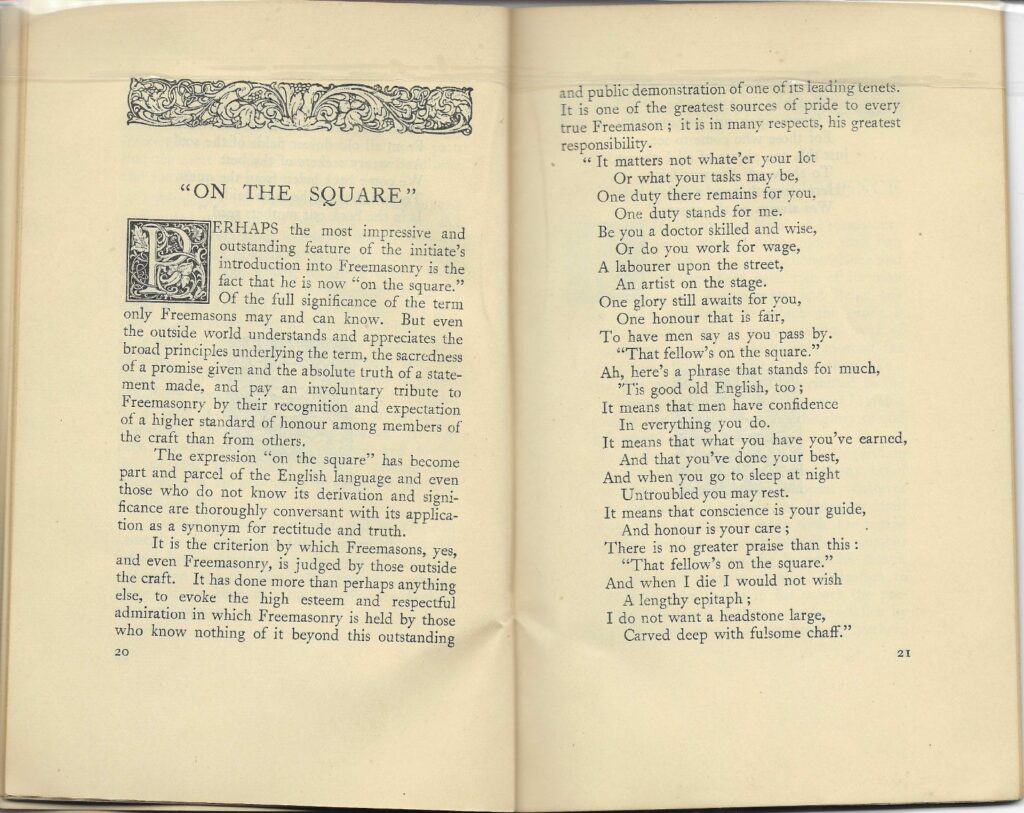
Perhaps the most impressive and outstanding feature of the initiate’s introduction into Freemasonry is the fact that he is now “on the square.” Of the full significance of the term only Freemasons may and can know. But even the outside world understands and appreciates the broad principles underlying the term, the sacredness of a promise given and the absolute truth of a statement made and pay an involuntary tribute to Freemasonry by their recognition and expectation of a higher standard of honour among members of the craft than from others.
The expression “on the square” has become part and parcel of the English language and even those who do not know its derivation and significance are thoroughly conversant with its application as a synonym for rectitude and truth.
It is the criterion by which Freemasons, yes, and even Freemasonry, is judged by those outside the craft. It has done more than perhaps anything else, to evoke the high esteem and respectful admiration in which Freemasonry is held by those who know nothing of it beyond this outstanding and public demonstration of one of its leading tenets. It is one of the greatest sources of pride to every true Freemason ; it is in many respects, his greatest
responsibility.
«It matters not whate’er your lot
Or what your tasks may be,
One duty there remains for you,
One duty stands for me.
Be you a doctor skilled and wise, ;
Or do you work for wage,
A labourer upon the street,
An artist on the stage.
One glory still awaits for you,
One honour that is fair,
To have men say as you pass by.
“That fellow’s on the square.”
Ah, here’s a phrase that stands for much,
Tis good old English, too ;
It means that men have confidence
In everything you do.
It means that what you have you’ve earned,
And that you’ve done your best,
And when you go to sleep at night
Untroubled you may rest.
It means that conscience is your guide,
And honour is your care ;
There is no greater praise than this:
“That fellow’s on the square.”
And when I die I would not wish
A lengthy epitaph ;
I do not want a headstone large,
Carved deep with fulsome chaff.
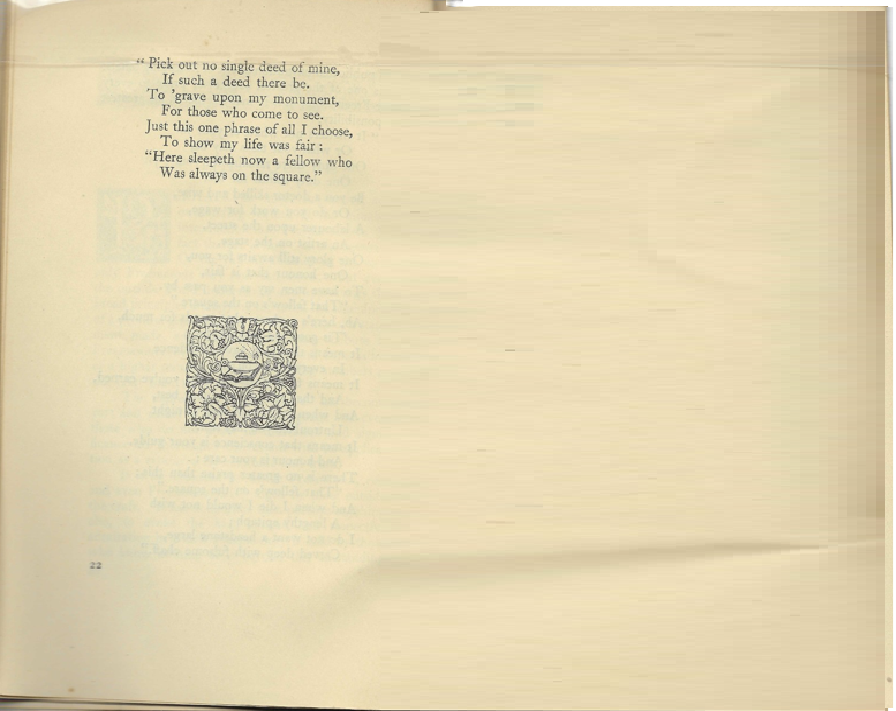
Pick out no single deed of mine,
If such a deed there be.
To grave upon my monument,
For those who come to see.
Just this one phrase of all I choose,
‘To show my life was fair :
“Here sleepeth now a fellow who
Was always on the square.”
On the Square : A Handbook for Freemasons
On the Square: A Handbook for Freemasons” (1923) by William Hy Beable is a foundational guide designed for initiates. It covers topics like the square’s symbolism, lodge structure, and the obligations of members to act with integrity. Written by William Hy Beable a member of the Aldwych Club Lodge 3794, it aims to educate new members on behaving “on the square”—meaning honestly and straightforwardly
On the Square
By W. H. Beable
Preface
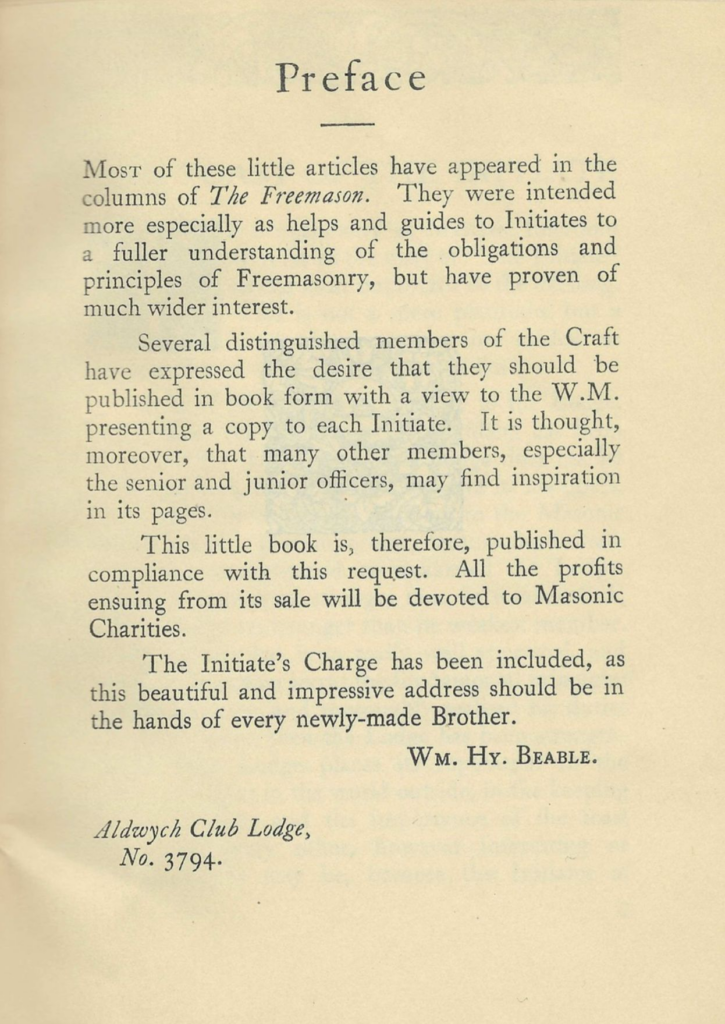
Most of these little articles have appeared in the columns of The Freemason. They were intended more especially as helps and guides to Initiates to a fuller understanding of the obligations and principles of Freemasonry, but have proven of much wider interest.
Several distinguished members of the Craft have expressed the desire that they should be published in book form with a view to the W.M. presenting a copy to each Initiate. It is thought, moreover, that many other members, especially the senior and junior officers, may find inspiration in its pages.
This little book is, therefore, published in compliance with this request.
All the profits ensuing from its sale will be devoted to Masonic Charities.
The Initiate’s Charge has been included, as this beautiful and impressive
address should be in the hands of every newly-made Brother.
Wm. Hy. Beable
Aldwych Club Lodge
No. 3794
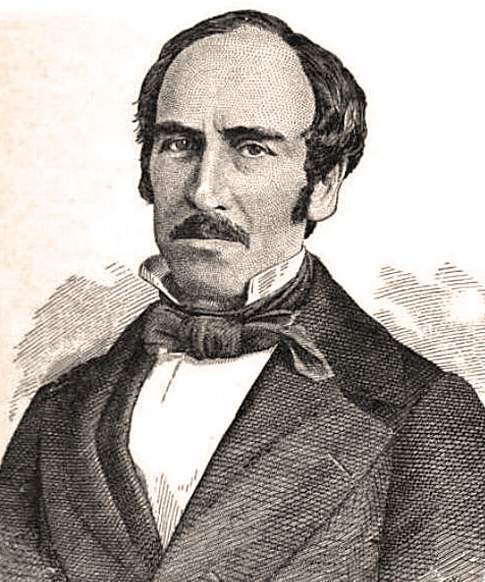
William Henry Beable
“On the Square” author, William Henry Beable was born in 1860, and an active member of Aldwych Club Lodge. William Henry Beable was an international Sales Manager esp. in Russia and Eastern Europe, he wrote eight other business books beside “On the Square” about doing business: Romance of great businesses, On the road; A book of experience and advice; Commercial Russia; Behind the Counter. A Practical Guide for Shop Assistants; Stories for speeches; After-Dinner Stories, with some practical hints on short speeches; Russian gazetteer and guide, being an account of the territorial divisions and a description of over 300 of the principal towns and cities of Russia, Finland and Siberia; Celebrated and Historical Speeches: an Anthology of Ancient and Modern Oratory; Epitaphs : Graveyard Humour & Eulogy.
W.H. Beable : Books about Business Management
Romance of great businesses
On the road
Behind the Counter
Russian gazetteer and guide,
Commercial Russia;
W.H. Beable : Books about Speeches
Epitaphs : Graveyard Humour & Eulogy.
Celebrated and Historical Speeches: an Anthology of Ancient and Modern Oratory
Stories for speeches
After-Dinner Stories, with some practical hints on short speeches;